
Cardboard vs. Metal Display Racks: How to Choose the Right One for Your Store
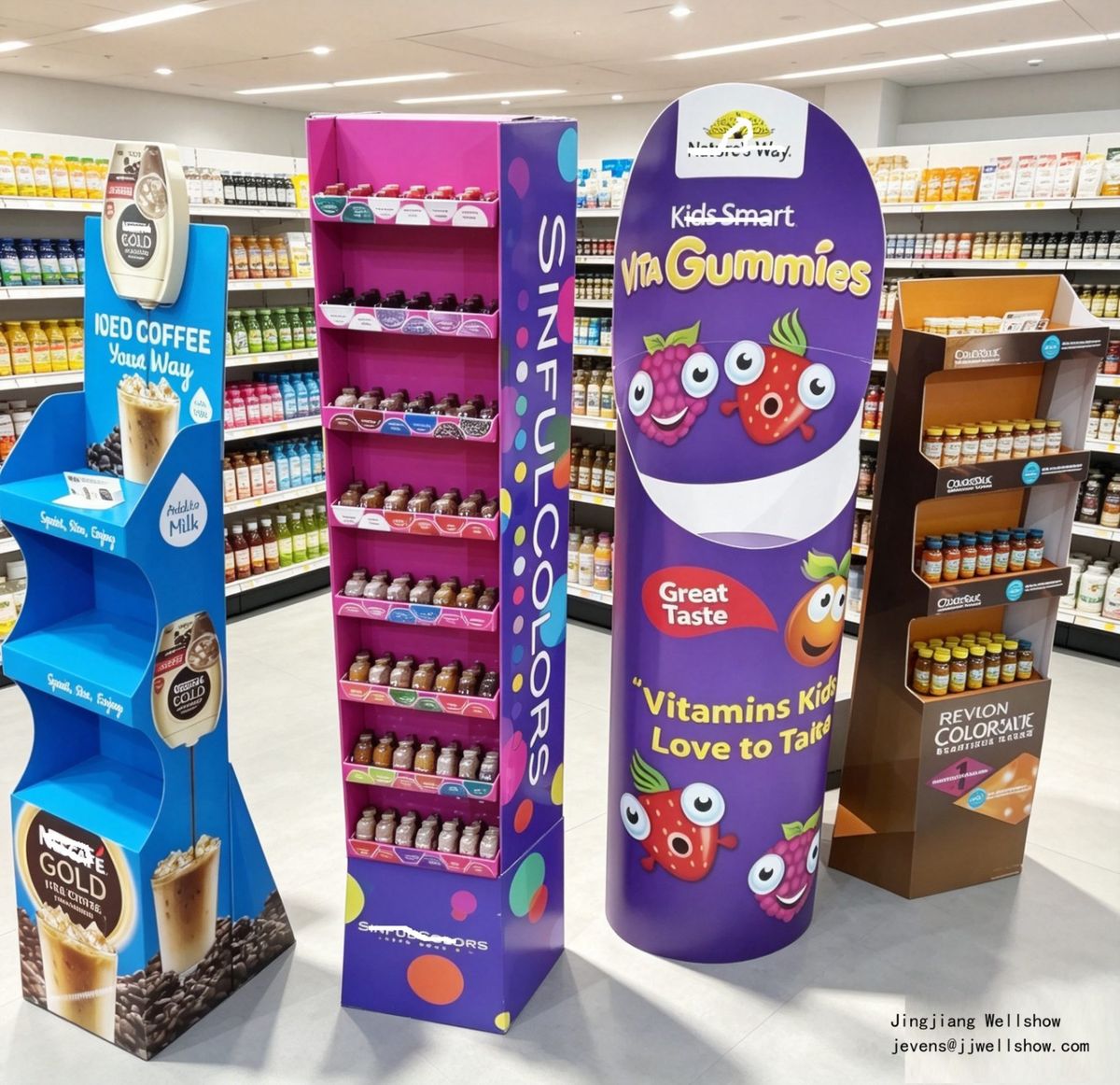
Walk into any supermarket and you will see both worlds side by side: colorful cardboard display stands promoting this month's coffee, gummies or chocolate — and sturdy metal wire display racks holding greeting cards, sunglasses and toys that have been there for years.
As a display manufacturer, one of the questions we hear most often from buyers is: "Should I order cardboard or metal?" The honest answer is: it depends on how long the display needs to live, how much weight it carries, and what you want your brand to say. Here is a practical guide.
The quick rule of thumb
- One-time promotions, seasonal products, new product launches → cardboard.
- Long-term merchandising, heavy products, movable fixtures → metal.
If you remember nothing else, remember this: cardboard is a campaign tool, metal is an infrastructure tool.
When cardboard display stands are the better choice
Cardboard (corrugated) displays shine in exactly the scenarios they were invented for:
- One-time promotions. A 6-week launch for a new iced coffee does not need a fixture that survives 6 years. A cardboard floor display delivers maximum impact at a fraction of the cost, and disposal is effortless when the campaign ends.
- Seasonal products. Christmas candy, summer sunscreen, back-to-school stationery — seasonal SKUs come and go. Cardboard displays can be printed for each season, stacked in storage, and recycled after the season closes.
- Maximum branding freedom. Corrugated board prints like paper. Full-color graphics, custom die-cut shapes (like the bottle-shaped tower in the photo above), foil accents — anything your designer imagines can become a 3D structure. Metal racks accept printed panels, but shaped silhouettes are far easier in cardboard.
- Low shipping cost. Cardboard displays ship flat-packed. One pallet can carry dozens of units, which matters enormously for international shipments and large retail rollouts.
- Fast, tool-free assembly. Most cardboard displays fold together in minutes without tools — store staff can set them up during a shift change.
- Budget-friendly testing. Not sure whether a display will lift sales? Test the concept in cardboard first. If the SKU earns a permanent spot on the floor, upgrade to metal.
When metal display racks are the better choice
Metal — usually steel wire, tube or sheet — is the right answer when the display has to work for a living:
- Load capacity. Wire racks carry canned food, bottled drinks, hardware and heavy bagged goods that would crush a cardboard shelf. A quality steel display holds 20–50 kg per shelf for years without sagging.
- Durability and long service life. A powder-coated steel display rack easily serves 5–10 years in daily retail use. Cardboard in the same environment is lucky to last one campaign, especially in humid aisles or near entrance doors where rain and mop water are a threat.
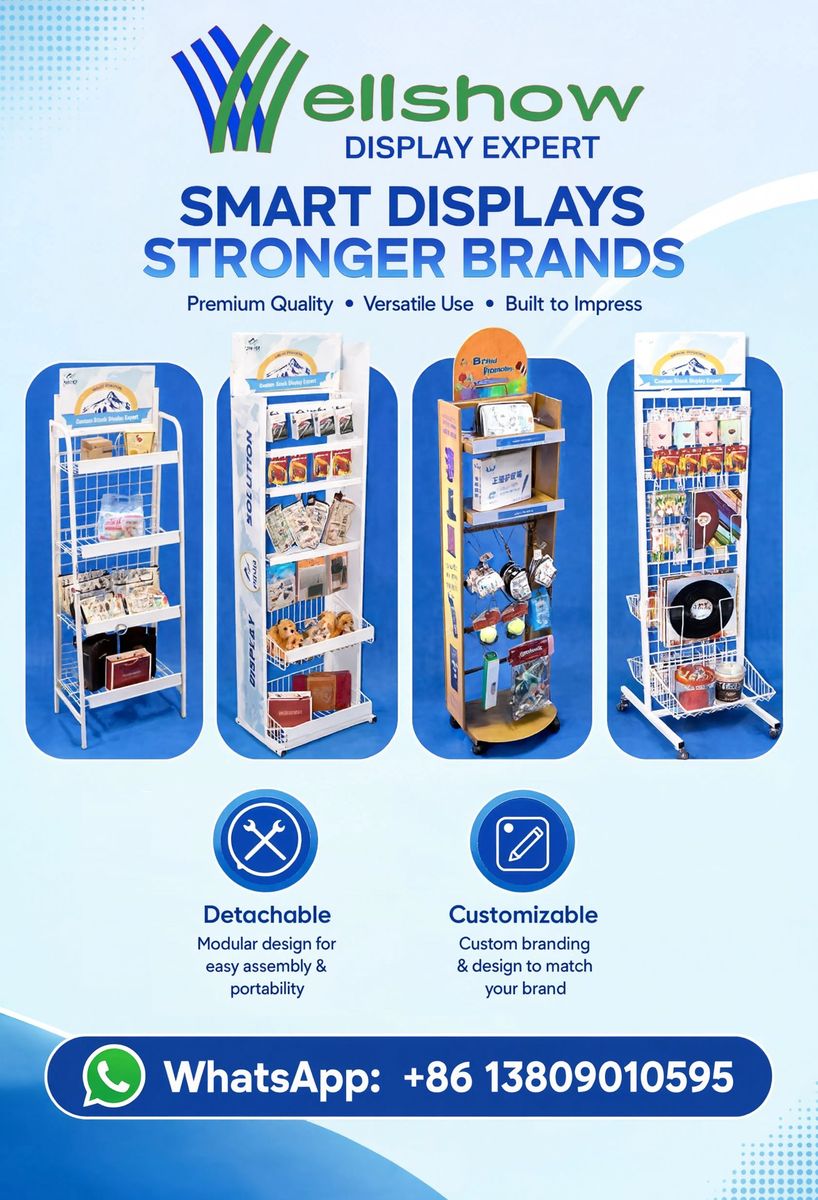
- Mobility requirements. Add casters (wheels) to a metal rack and staff can roll a full display to a new position without unloading it. The mobile wire racks in our photo — used for greeting cards, snacks, records and toys — are moved nightly in many stores. Try that with a loaded cardboard tower.
- Multi-campaign reuse. This is the point buyers often miss: a metal frame is a platform. Swap the printed header card or side panels and the same rack runs a different promotion every month for a decade. One fixture, unlimited campaigns.
- Tougher environments. Outdoor garden centers, refrigerated sections, warehouse clubs, petrol stations — anywhere with moisture, temperature swings or rough handling belongs to metal.
- A premium, trustworthy look. A solid wire or steel fixture signals "we are here to stay." For categories like electronics accessories, stationery or pharmacy, that permanence supports brand trust in a way a temporary cardboard unit cannot.
The environmental question: not as simple as it looks
Many buyers assume cardboard is automatically the "green" choice because it looks natural and recyclable. The reality is more nuanced:
- Cardboard's eco story collapses at scale if displays are single-use. A stand used for one 6-week campaign and then discarded generates waste in every store, every campaign, all year round. Recycling helps, but collection, transport and reprocessing all consume energy — and many displays are contaminated by shrink wrap, tape or food residue and never get recycled at all.
- Steel racks have a dramatically better lifetime footprint. One metal display that serves ten years replaces dozens of single-use cardboard units. Steel is also one of the most recycled materials on earth — at end of life, the frame is fully recyclable into new steel with no loss of quality.
- The best answer is often hybrid. A steel wire frame carrying replaceable cardboard graphics panels gives you metal's durability and cardboard's branding flexibility with minimum waste. This is the configuration we recommend most often for long-term fixtures with rotating promotions.
If sustainability is a formal goal for your brand, calculate waste per campaign-year rather than judging by material alone. Reusable metal almost always wins the long game.
Cost: compare cost-per-use, not price-per-unit
A cardboard floor display might cost one-fifth of a steel rack — but compare total cost of use:
- Cardboard: low unit price × one campaign = you buy a new fleet every cycle, plus repeat freight and setup labor.
- Metal: higher unit price ÷ 5–10 years × reusable graphics = a low cost per selling day, and the fixture becomes a store asset instead of a consumable.
For a promotion running once or twice, cardboard wins on pure economics. For anything that will sit on the floor more than six months, metal usually costs less per year and performs better every day in between.
How we can help
Jingjiang Wellshow International manufactures both sides of this decision — full-color cardboard floor displays for promotions, and powder-coated steel and wire display racks for permanent merchandising, including detachable, wheeled and fully customized designs.
Explore our ranges:
Not sure which material fits your product? Send us your SKU weight, campaign duration and store environment — our team will recommend the most cost-effective structure, with free custom design for qualified orders. Contact us at jevens@jjwellshow.com or via WhatsApp +86 138 0901 0595.
Frequently asked questions
How much weight can a cardboard display hold?
A well-engineered corrugated floor display typically carries 10–25 kg total, with 2–5 kg per shelf. Beyond that, or for liquids and canned goods, specify a steel or wire rack.
Can metal racks be customized with my branding?
Yes. Powder coating in your brand color, printed header cards, side panels, shelf strips and custom wire shapes are all standard options for our metal displays.
Are cardboard displays recyclable?
Corrugated displays are recyclable in principle, and most use recyclable inks and adhesives — but real recycling rates depend on local store waste handling. For high-frequency campaigns, a reusable metal frame with replaceable graphics is the lower-waste option.
What is the typical lead time?
Cardboard samples in 5–7 days, production 15–20 days. Metal displays typically sample in 7–10 days with production 20–30 days depending on finishing.

